Israeli authorities blocked senior Catholic leaders from entering the Church of the Holy Sepulchre on Palm Sunday, an unprecedented move that drew sharp criticism worldwide and disrupted one of Christianity’s most sacred observances. Palm Sunday marks the start of Holy Week, culminating in Easter, and typically draws thousands of pilgrims to Jerusalem.
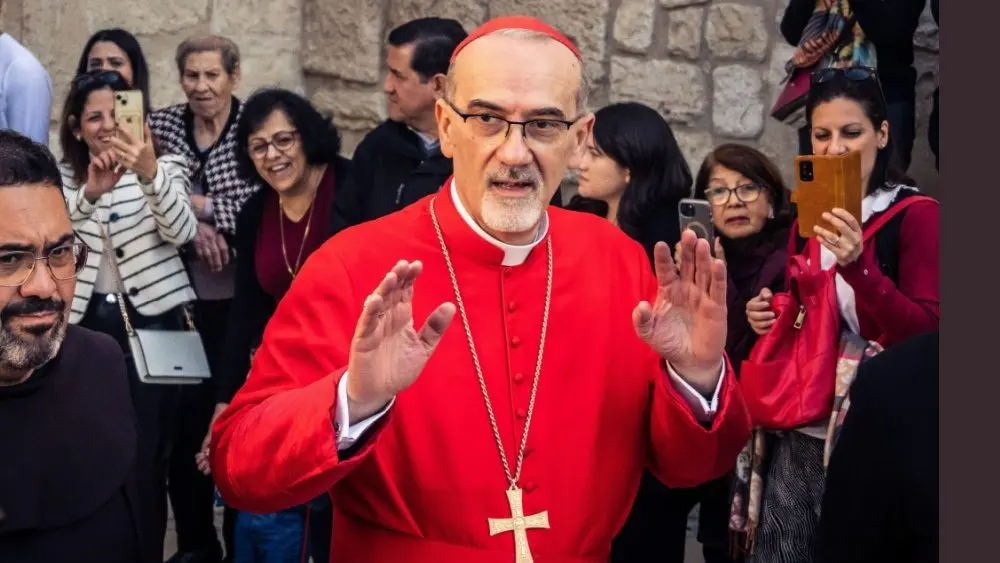
According to the Latin Patriarchate of Jerusalem, Pierbattista Pizzaballa and Rev. Francesco Ielpo were stopped before reaching the church, preventing them from holding a private Palm Sunday Mass. The Patriarchate said this marked “the first time in centuries” that the ceremony could not take place at the site many Christians believe is where Jesus was crucified. Church officials condemned the decision, calling it “a manifestly unreasonable and grossly disproportionate measure” and warning it set “a grave precedent” that disregards “the sensibilities of billions of people around the world, who, during this week, look to Jerusalem.”
The Latin Patriarchate emphasized that the planned Mass was private and not part of the large Palm Sunday procession, which had already been canceled due to the conflict. In recent weeks, churches in the area had been holding limited services under strict attendance caps. While Pierbattista Pizzaballa went on to hold services at alternative locations, the absence of the traditional ceremony at the Church of the Holy Sepulchre underscored the broader impact of the conflict on religious life in the city.
The restrictions come amid heightened security concerns tied to the ongoing conflict involving Israel and Iran. Israeli police said access to major holy sites in Jerusalem’s Old City had been suspended due to safety risks, citing narrow streets, limited emergency access, and the threat of missile strikes. Officials noted that even small gatherings could pose dangers in the event of a strike. In a statement, the office of Benjamin Netanyahu said the move was made “out of special concern for his safety” and insisted “there was no malicious intent whatsoever.” Authorities added that efforts are underway to allow limited worship later in the week.
Despite those assurances, the decision triggered international criticism. U.S. Ambassador Mike Huckabee described the incident as “an unfortunate overreach already having major repercussions around the world,” noting the planned ceremony would have involved fewer than 50 people—within Israel’s own safety guidelines.
European leaders echoed the concern. Emmanuel Macron stressed that “the free exercise of worship in Jerusalem must be guaranteed for all religions,” while Giorgia Meloni called the move “an offence not only to the faithful, but to any community that respects religious freedom.” Spain’s Pedro Sánchez labeled it an “unjustified attack on religious freedom,” with additional criticism coming from European Union foreign policy chief Kaja Kallas, who called the matter a “violation of religious freedom,” and Italy’s Foreign Minister Antonio Tajani, who summoned Israel’s ambassador for clarification.
Israeli officials say they are working to find a solution that will allow worship to resume safely in the coming days, as global attention remains fixed on Jerusalem during one of the most significant weeks in the Christian calendar.
Editorial credit: Jose HERNANDEZ Camera 51 / Shutterstock.com